You have 47 saved Instagram posts, three mood boards and a name that looks great written in all caps.
What you probably do not have is the budget—or the desire—to order 1,000 hoodies before knowing whether anyone will actually buy them.
That is where low-MOQ private label production changes the game.
Starting a streetwear brand no longer has to mean investing tens of thousands of euros in custom product development, complicated tech packs and a warehouse full of unsold inventory. By working with premium blanks and a low-MOQ clothing manufacturer, you can launch professionally, test the market and grow according to real customer demand.
Here is how to do it.
What Does Low MOQ Mean?
MOQ stands for Minimum Order Quantity. It is the smallest number of pieces a manufacturer will accept for a production order.
Traditional custom clothing manufacturers may require 300, 500 or even 1,000 units per style and colour. This can create a serious problem for an emerging streetwear brand:
More money tied up in inventory
More storage space required
Greater risk if the collection does not sell
Less flexibility to test new designs
Pressure to create too many products too quickly
A low-MOQ manufacturer allows you to begin with a smaller and more manageable production run.
At Private Label Clothes, emerging brands can start from 100 pieces, depending on the garment and customization requirements. This gives you access to professional European production without committing to mass-market quantities.
The goal of your first collection is not to fill a warehouse. It is to prove that people want your product.
1. Define What Your Streetwear Brand Stands For
Streetwear is crowded.
Another black oversized T-shirt with a logo on the chest is not automatically a brand.
Before contacting a manufacturer, define the basic foundations of your project:
Who is your ideal customer?
What style of streetwear are you creating?
What makes the brand recognizable?
Why should customers choose you?
What price level are you targeting?
What values does the brand represent?
Your positioning could be based on minimalist luxury, skate culture, music, sport, sustainability, local identity, technical performance or a specific community.
The clearer your concept is, the easier it becomes to make decisions about garments, colours, graphics, photography and pricing.
A strong brand does not need to appeal to everyone. It needs to feel relevant to the right people.
2. Start with a Small, Focused Collection
One of the most common mistakes new founders make is launching too many products.
You do not need:
Seven T-shirt designs
Four different hoodie fits
Six colours per garment
A complete accessories collection
Twenty-four different size and colour combinations
Every additional style, colour and size creates another SKU that must be produced, photographed, stored, promoted and sold.
Start with a focused capsule collection of one to three core products.
A strong first streetwear drop could include:
Option 1: The Essential Drop
One premium T-shirt
One heavyweight hoodie
One pair of sweatpants
Option 2: The Graphic Drop
One T-shirt in two colours
One hoodie in one colour
Two carefully developed graphics
Option 3: The Single-Product Launch
One exceptional oversized T-shirt
One recognizable fit
One or two colourways
One strong campaign concept
A smaller collection makes your brand easier to understand and your marketing more focused.
It also allows you to invest more attention in the quality of every product.
3. Choose the Right Garment, Not Just the Cheapest Blank
Your artwork might attract the first click, but the garment itself determines whether customers buy again.
A low-quality blank can quickly damage your brand through:
Weak or transparent fabric
Poor neck recovery
Inconsistent sizing
Unflattering proportions
Shrinkage after washing
Prints that crack or fade
Seams that twist or lose their shape
Streetwear customers pay close attention to weight, fit, structure and hand feel.
When choosing your garments, consider:
Fabric Weight
Fabric weight is usually measured in GSM, or grams per square metre.
A higher GSM does not automatically mean better quality, but heavyweight fabrics are often preferred for premium streetwear because they create a more structured silhouette and stronger perceived value.
Fit and Silhouette
Decide whether the garment should be:
Regular fit
Relaxed fit
Boxy
Oversized
Cropped
Drop shoulder
Longline
Fit is part of your brand identity. Two T-shirts with the same graphic can feel like completely different products if their proportions are different.
Construction
Look at details such as:
Neck rib quality
Stitching
Reinforced seams
Cuffs and waistbands
Fabric recovery
Garment finishing
Internal labels
Customers may not know the technical name for every construction detail, but they notice when a garment feels cheap.
4. Use Private Label Blanks to Reduce Risk
There are two main ways to manufacture a streetwear collection.
Fully Custom Cut-and-Sew
A garment is developed from the beginning according to your design, measurements, fabric and construction specifications.
This gives you maximum creative freedom, but it normally requires:
Detailed tech packs
Pattern development
Fabric sourcing
Prototype development
Fit revisions
Higher development costs
Larger minimum quantities
Longer lead times
Private Label Production
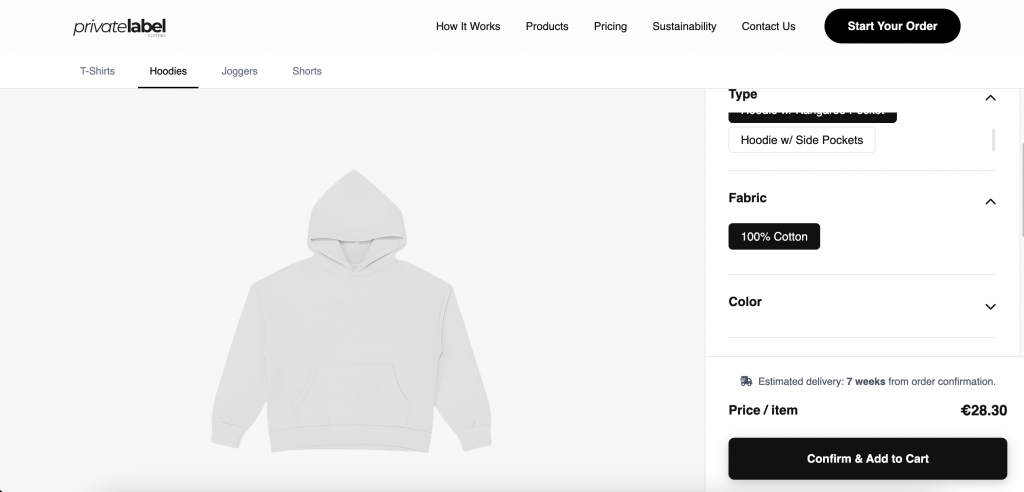
You choose an existing, professionally developed garment and customize it with your branding, colours, prints, embroidery and labels.
For a new brand, private label is often the more intelligent starting point.
You avoid spending months developing a basic T-shirt or hoodie that already exists in the fit and quality you need. Instead, you can focus your budget on the elements customers actually associate with your brand:
Visual identity
Artwork
Labels
Packaging
Photography
Content
Marketing
Private label does not mean generic when the base garment, customization and branding are carefully selected.
It means starting with a proven product instead of paying to reinvent it.
5. Develop a Recognizable Brand Identity
Your logo is only one part of your identity.
A professional streetwear brand should have a consistent visual system that can be applied across clothing, packaging, social media and its online store.
Define:
Primary logo
Secondary logo or symbol
Typography
Colour palette
Photography direction
Graphic style
Brand tone of voice
Packaging concept
Label design
Your identity should work on both large and small applications.
A complex logo might look impressive on a website but become unreadable when embroidered onto a small chest position or printed on a neck label.
Before production, test your designs at their real dimensions.
A 30-centimetre back print and a four-centimetre embroidery require completely different levels of detail.
6. Choose the Right Customization Techniques
Customization is what turns a premium blank into your product.
The most appropriate technique depends on your design, budget, order quantity and desired finish.
Printing
Printing works well for graphics, illustrations, typography and photographic artwork.
Before submitting a design, confirm:
Final print dimensions
Exact print position
Number of colours
Garment colour
Required artwork format
Whether special effects are needed
Whenever possible, provide vector files such as AI, EPS or SVG. High-resolution PDF, PNG or JPG files may also be suitable depending on the technique.
Embroidery
Embroidery creates a textured and durable premium finish.
It is ideal for:
Small chest logos
Brand symbols
Caps
Minimal typography
Sleeve details
Very fine lines, tiny lettering and complex gradients may need to be simplified before embroidery.
Custom Labels
Labels make the garment feel like a genuine brand product rather than promotional merchandise.
Depending on the project, you may include:
Main brand label
Size label
Care and composition label
Printed neck label
Hem label
External woven label
Make sure all mandatory product information complies with the regulations of the countries where you intend to sell.
Custom Colours
Colour can make a simple silhouette recognizable.
Instead of relying only on standard black, white and grey, consider building a signature palette around one or two distinctive colours.
However, avoid launching too many colourways at once. Every additional colour divides your order quantity and increases inventory complexity.
7. Calculate Your Real Product Cost
Do not build your retail price using only the garment production price.
Your real landed cost may include:
Garment
Printing or embroidery
Custom labels
Packaging
Sampling
Shipping
Duties or taxes
Payment processing
Warehousing
Photography
Marketing
Returns and exchanges
For example, a hoodie that costs €35 to produce does not cost your business only €35 by the time it reaches the customer.
Underpricing is one of the fastest ways to create a brand that generates sales but no profit.
Your retail price must cover your total costs while leaving enough margin to:
Invest in marketing
Replace defective or returned products
Develop future collections
Offer occasional promotions
Work with retailers or creators
Grow the business
Do not choose your manufacturer only because it offers the lowest unit price.
A product that costs slightly more but creates better reviews, stronger content and repeat purchases can be far more profitable.
8. Prepare Your First Order Carefully
Before placing your order, confirm the complete specification for each product.
You should provide or approve:
Garment style
Colour
Size breakdown
Total quantity
Print or embroidery artwork
Artwork dimensions
Artwork position
Label artwork
Label position
Packaging requirements
Delivery address
Required deadline
Do not send a low-resolution logo through a messaging app and expect the manufacturer to guess the rest.
Clear information prevents delays, additional costs and disappointing results.
For example, instead of writing:
“Put this logo quite large on the back.”
Specify:
“Centre-back screen print, 30 cm wide, positioned 8 cm below the neckline.”
Precision is not unnecessary bureaucracy. It is how your design reaches production correctly.
9. Build Your Launch Before the Products Arrive
Do not wait for production to finish before thinking about marketing.
Use the production period to prepare:
Your online store
Product descriptions
Size guides
Packaging
Email marketing
Social media content
Campaign concepts
Influencer seeding
Launch calendar
Paid advertising
Customer service policies
You can also create content around the process:
Choosing the garments
Developing the logo
Testing graphics
Selecting colours
Preparing labels
Behind-the-scenes production
Packaging the first orders
People enjoy seeing a brand being built, especially when they feel involved before the launch.
Consider collecting email sign-ups or opening a limited pre-order before committing to a larger second production run.
10. Treat Your First Drop as Market Research
Your first launch will teach you more than months of planning.
Track:
Best-selling sizes
Best-performing colours
Conversion rate
Return rate
Customer feedback
Most effective content
Most profitable sales channel
Products customers request next
Do not increase quantities simply because the launch received likes or comments.
Scale based on actual sales.
A low MOQ allows you to test the market with less risk, learn from real customers and improve the next collection without being trapped by hundreds of unsold units.
Common Mistakes When Starting a Streetwear Brand
Ordering Too Much Inventory
A lower price per unit is not useful when half the stock remains unsold.
Choosing Price Over Quality
Your manufacturer is helping shape your reputation. Poor-quality garments can destroy customer trust before the brand has time to grow.
Launching Too Many Designs
More products do not automatically create more sales. A focused collection is usually easier to promote.
Copying Established Brands
Inspiration is normal. Imitation makes your brand forgettable and may create legal problems.
Ignoring Fit
A strong graphic cannot rescue an uncomfortable or badly proportioned garment.
Underestimating Marketing
Manufacturing the collection is only half the project. Customers still need a reason to discover it, trust it and buy it.
Skipping the Numbers
Followers, likes and compliments do not pay production invoices. Calculate your costs, margins and break-even point before placing the order.
Why Manufacture Streetwear in Portugal?
Portugal has built a strong international reputation for premium textile and apparel production.
For emerging streetwear brands, Portuguese manufacturing offers a valuable combination of:
High-quality fabrics
Strong garment construction
Modern fits
Skilled textile knowledge
European production
Ethical manufacturing standards
Shorter supply chains for European brands
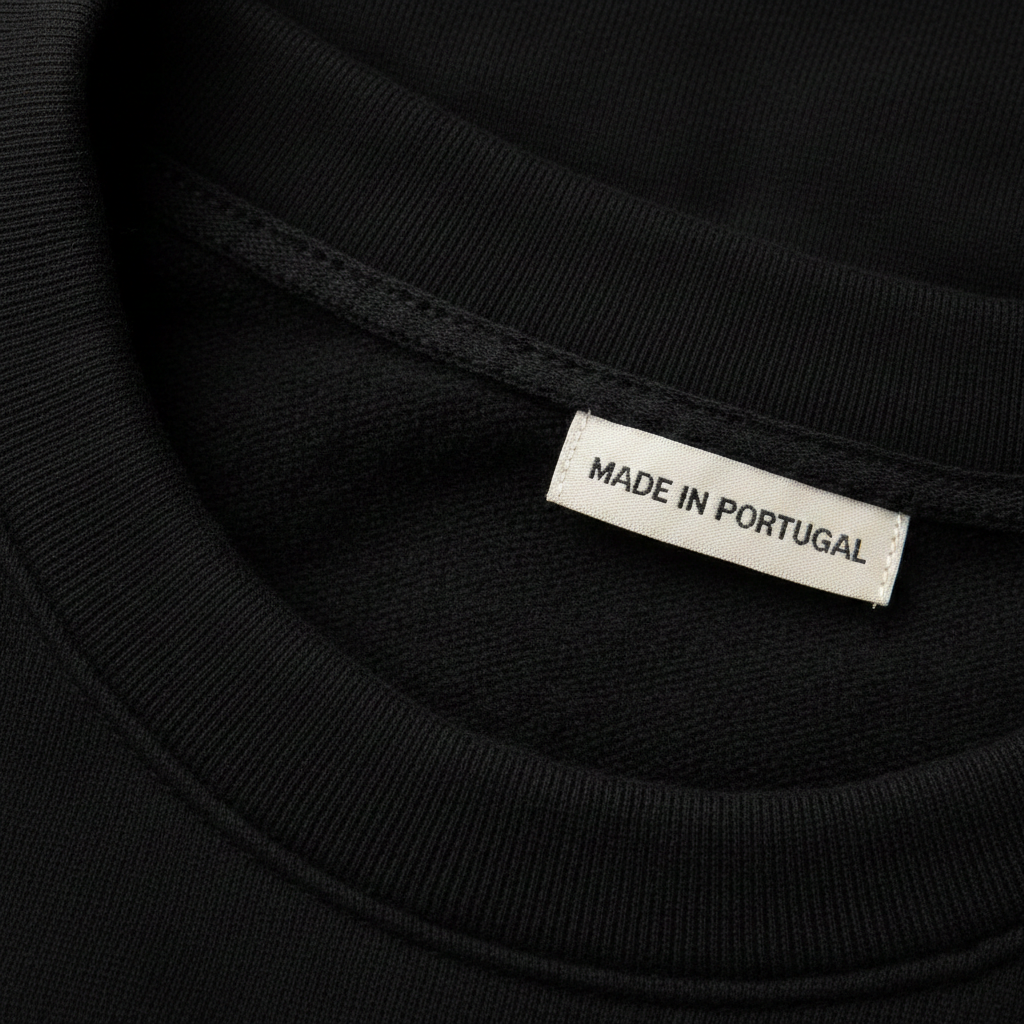
Premium “Made in Portugal” positioning
At Private Label Clothes, we make this production ecosystem more accessible through a curated selection of premium garments that can be customized with your own labels, prints, embroidery and colours.
You bring the identity.
We provide the canvas.
Start Small. Build Properly. Scale with Demand.
You do not need a huge collection, a celebrity endorsement or a warehouse containing 5,000 hoodies to start a streetwear brand.
You need:
A clear audience
A focused product
A reliable manufacturing partner
Strong branding
Realistic pricing
A launch strategy
The discipline to improve using customer feedback
Low-MOQ production gives you space to test your ideas without sacrificing professional quality.
Start with fewer products. Make them better. Learn what your customers actually want. Then scale the pieces that prove they deserve to exist.
If you’ve ever wondered why the world’s most influential designers—from the late Virgil Abloh to Jerry Lorenzo—have a deep obsession with Northern Portugal, you’re not alone. In the industry, it’s known as the “Golden Circle” of manufacturing.
While the masses are fighting for scraps on Alibaba, the real players are in the hills of Braga and Guimarães. Here are the top 10 brands that have leveraged “Made in Portugal” to turn basic apparel into high-margin luxury assets.
1. Off-White
The brand that bridged the gap between the skate park and the runway. Virgil Abloh famously utilized Portuguese factories for Off-White’s heavy-duty jersey and complex screen-printing. Why? Because the “Made in Portugal” label on an Off-White hoodie justifies a $600 price tag through sheer structural integrity—a drape that stays stiff and a print that never cracks.
Under Demna Gvasalia, Balenciaga shifted the “Dad Shoe” and “Oversized” movements into overdrive. While their heritage is Spanish and their headquarters are French, a massive portion of their jersey and footwear production happens in Porto. They rely on Portuguese artisans to achieve that “perfectly worn-in but indestructible” feel that defines modern luxury.
Jerry Lorenzo’s “Essentials” line became a global phenomenon by offering luxury silhouettes at a more accessible price point. While some of the main line is produced in the US or Italy, the highest-quality blanks and jersey developments often trace back to Portuguese mills. They are the only ones capable of producing the specific “California Sun-Wash” effect without ruining the fabric.
Represent is the ultimate “Made in Portugal” success story. Brothers George and Mike Heaton moved their production from the UK to Portugal years ago to “own the process.” Today, their “Owners Club” hoodies are legendary for their weight and fit. They don’t just buy blanks; they engineer custom 480GSM loopback cotton in Portuguese facilities.
The “Essentialism” masters. Cole Buxton and Jonny Wilson built a cult following based on one thing: the perfect fit. By manufacturing in Portugal, they were able to develop the “Boxy Hoodie” and “Warm Up” shorts that have become the industry standard for silhouette. Their brand is a testament to what happens when you prioritize garment engineering over marketing.
Samuel Ross’s industrial-inspired label is all about technical complexity. A-COLD-WALL* utilizes Portuguese factories for their unique dyeing processes and unconventional fabric treatments. Portugal offers the experimental freedom that mass-production hubs simply can’t handle.
7. Axel Arigato
The Swedish powerhouse revolutionized the luxury sneaker market, and they did it almost entirely in Portugal. Their footwear is handcrafted in the Felgueiras region, known as the world’s capital for luxury leather. By manufacturing in Porto, they offer “Common Projects” quality with a much faster turnaround time for new drops.
Danish brothers Julius and Victor Juul are the kings of “Industrial Elegance.” Their garments often feature complex hardware and technical fabrics that require extreme precision. They manufacture in Portugal because the technicians there are willing to iterate on prototypes until the avant-garde vision is met with structural perfection.
Pangaia isn’t just a brand; it’s a materials science company. They choose Portugal because of the country’s lead in sustainability. From seaweed-fiber T-shirts to peppermint-oil-treated hoodies, Portugal provides the high-tech, eco-certified facilities needed to produce “the future of fashion.”
If you’ve ever bought a high-end streetwear blank that felt “too good to be a blank,” it was probably Rue Porter. Based in Europe and manufacturing in Portugal, they’ve become the go-to supplier for emerging luxury brands. They proved that you don’t need a million-dollar marketing budget if your product is the highest-quality jersey on the market.
The secret of big brands isn’t a secret anymore. They produce in Portugal because they want to sell products that last for a decade, not a season. They want the “Made in Europe” prestige. And they want a partner who understands that a hoodie is more than just a piece of clothing—it’s a statement of quality.
Stop scrolling and start building. Access the same high-end Portuguese facilities used by the world’s most successful streetwear founders.
Let’s be real for a second. Have you ever wondered why brands like Fear of God, Off-White, or Balenciaga often have “Made in Portugal” stitched into their neck labels?
It’s not a coincidence. And it’s not because they like the weather.
The world’s most successful luxury streetwear founders know something that the “Alibaba-scrollers” don’t: Luxury isn’t a price point; it’s a production standard. While most people are busy chasing the lowest possible cost per unit, the big players are chasing the highest possible perceived value.
And they’re doing it in the heart of the Portuguese textile industry.
The “Invisible” Quality of Portuguese Streetwear
What separates a $20 “merch” hoodie from a $400 luxury streetwear piece? Often, it’s things the average consumer can’t name, but they can feel instantly.
1. The Mastery of Heavyweight Fabrics
In Portugal, we don’t just “buy fabric.” We engineer it. Luxury streetwear requires a specific drape—stiff enough to hold a silhouette but soft enough to feel like a second skin. Our mills specialize in 320GSM French Terry that doesn’t pill, doesn’t sag, and stays blacker-than-black even after fifty washes.
2. The “Perfect” Oversized Fit
Luxury streetwear is defined by the silhouette. If the shoulder drop is two centimeters off, the whole “look” is ruined. Portuguese garment technicians are masters of the modern European fit. We’ve spent decades perfecting the boxy, drop-shoulder aesthetic that defines the current era of fashion.
Ethical Production as a Marketing Powerhouse
In 2026, your customers aren’t just buying a design; they’re buying a conscience. The modern streetwear consumer is hyper-aware of “Fast Fashion” horror stories. Producing in Portugal gives your brand an immediate ethical “stamp of approval.”
Fair Wages: Every garment is made under strict EU labor laws.
Sustainability: Portugal leads the world in recycled cotton and water-saving dyeing techniques.
Proximity: If you’re based in Europe or the US, shipping from Portugal is faster, cheaper, and has a lower carbon footprint than shipping from Southeast Asia.
Private Label: The Entry Point to the Big Leagues
The biggest barrier to entry for luxury production used to be the MOQ (Minimum Order Quantity). Traditionally, if you wanted the quality of the “Big Brands,” you had to order 1,000+ pieces per style.
We changed the rules.
Through Private Label Clothes (Portugal Textile), we’ve opened the doors of these high-end Portuguese facilities to emerging brands. We offer:
Low MOQs: Start your luxury line with just 100 pieces.
Pre-Vetted Blanks: No more “Cotton Lottery.” Every blank we offer has been tested against luxury standards.
End-to-End Customization: From custom dyeing to high-density puff prints and intricate embroidery.
The secret of big brands isn’t a secret anymore. They produce in Portugal because they want to sell products that last for a decade, not a season. They want the “Made in Europe” prestige. And they want a partner who understands that a hoodie is more than just a piece of clothing—it’s a statement of quality.
Are you ready to stop scrolling and start building a real brand?
We know you. We’ve seen you. You’ve spent the last 72 hours scrolling through Alibaba with 27 tabs open, trying to decipher if a supplier named “Best-Top-Garment-Factory-99” is actually legit. You order 100 t-shirts, say a quick prayer to the e-commerce gods, and hope—desperately—that they arrive at your door without holes in the armpits or a fit that looks like a cardboard square.
Spoiler alert: Cheap merch rarely builds a luxury brand.
If you want to stop being “the guy selling some tees with cool graphics” and start being a respected fashion brand, the secret isn’t just in the design. It’s in the base. It’s the blank.
The “Cotton Lottery” Problem
We all know the feeling. The supplier promises “100% Premium Cotton,” but what arrives feels like 80-grit sandpaper after the very first wash.
When you use low-quality blanks, you’re telling your customer: “Thanks for the money, but I don’t really expect you to wear this three months from now.” A real fashion brand focuses on longevity. It’s the difference between a shirt that ends up at the bottom of the pajama drawer and that favorite hoodie your customer wears until the threads fall off.
Pro Tip: In the fashion world, your reputation is only as strong as your weakest seam.
Why Choose Premium Blanks Made in Portugal?
Portugal isn’t just about sunshine and custard tarts; it is the textile epicenter of Europe for high-end streetwear and luxury segments. By elevating your products with our curated selection at Private Label Clothes, you’re skipping the sourcing headaches:
1. The “Handfeel” Factor
It’s not just cotton; it’s the GSM (grams per square meter). Our pieces use heavyweight cotton that holds its structure. When a customer pulls your t-shirt out of the mail and feels the weight of the fabric, the perceived value triples instantly.
2. European Fit vs. Random Fit
Forget those disproportionate cuts where the sleeves are too short and the body is too wide. Our patterns are developed for the modern market—perfectly draped oversized cuts, tight necklines that don’t sag, and reinforced stitching.
3. Ethics & Sustainability
Nowadays, “Made in Portugal” is a prestige label. It stands for ethical production, fair wages, and high environmental standards. It’s a massive selling point you can (and should) use to market your brand.
Customization: The Final Touch
Having the best blank in the world is 50% of the journey. The other 50% is how you make it yours. We’ve turned what used to be a logistical nightmare into a streamlined process:
Custom Labels: We swap those generic tags for your own brand identity—whether it’s white satin care labels or high-def neck prints.
High-Definition Prints & Embroidery: Where the fine details don’t disappear after a wash.
Endless Pantone Possibilities: If you want that specific “Midnight Charcoal” shade, that’s exactly what you’ll get. No “close enough” colors here.
Conclusion: Stop Playing Russian Roulette with Suppliers
You can keep playing the sourcing lottery and hoping the logistics don’t fail you, or you can professionalize your production right now.
The transition from “Merch” to “Fashion Brand” happens the moment you decide that the quality of your product must be as good as the marketing behind it.
Ready to feel the difference of Portuguese textile excellence?