
You already have the audience.
That does not automatically mean you have a clothing brand.
A creator can place a catchphrase on a hoodie, sell it to loyal followers and generate a successful merchandise drop.
A creator can also develop an independent fashion, beauty or lifestyle company with its own identity, products and customers.
Those are two different business models.
Influencer merch monetizes an existing relationship between a creator and their audience.
A creator brand uses the creator’s audience as the launch platform for a business that should eventually be able to stand on its own.
Neither model is automatically better.
Merchandise is faster, simpler and less risky.
A creator brand offers greater product value, stronger margins and more long-term potential—but demands significantly more investment, development and operational work.
The correct strategy depends on what you actually want to build.
Creator Brand vs Influencer Merch at a Glance
| Factor | Influencer merch | Creator brand |
|---|---|---|
| Main objective | Monetize the existing audience | Build an independent consumer brand |
| Product identity | Directly linked to the creator | Can exist beyond the creator |
| Common products | Printed T-shirts, hoodies, caps and accessories | Developed apparel, lifestyle products and complete collections |
| Customer motivation | Support, belonging and fandom | Product quality, design and brand identity |
| Launch speed | Fast | Slower |
| Initial investment | Low to moderate | Moderate to high |
| Product development | Limited | More extensive |
| Minimum quantities | Can begin with print on demand | Usually requires production quantities |
| Margins | Often limited by fulfilment model | Greater potential with controlled production |
| Inventory risk | Low with print on demand or presales | Higher |
| Marketing | Creator’s own content | Creator content plus independent brand marketing |
| Long-term value | Depends heavily on creator relevance | Can become a separate business asset |
| Best for | Communities, events and quick launches | Creators building a lasting company |
What Is Influencer Merch?
Influencer merchandise is a product created primarily for the creator’s existing followers.
It often features:
- Creator name
- Channel name
- Logo
- Catchphrase
- Inside joke
- Character
- Podcast reference
- Tour date
- Community expression
- Artwork connected to specific content
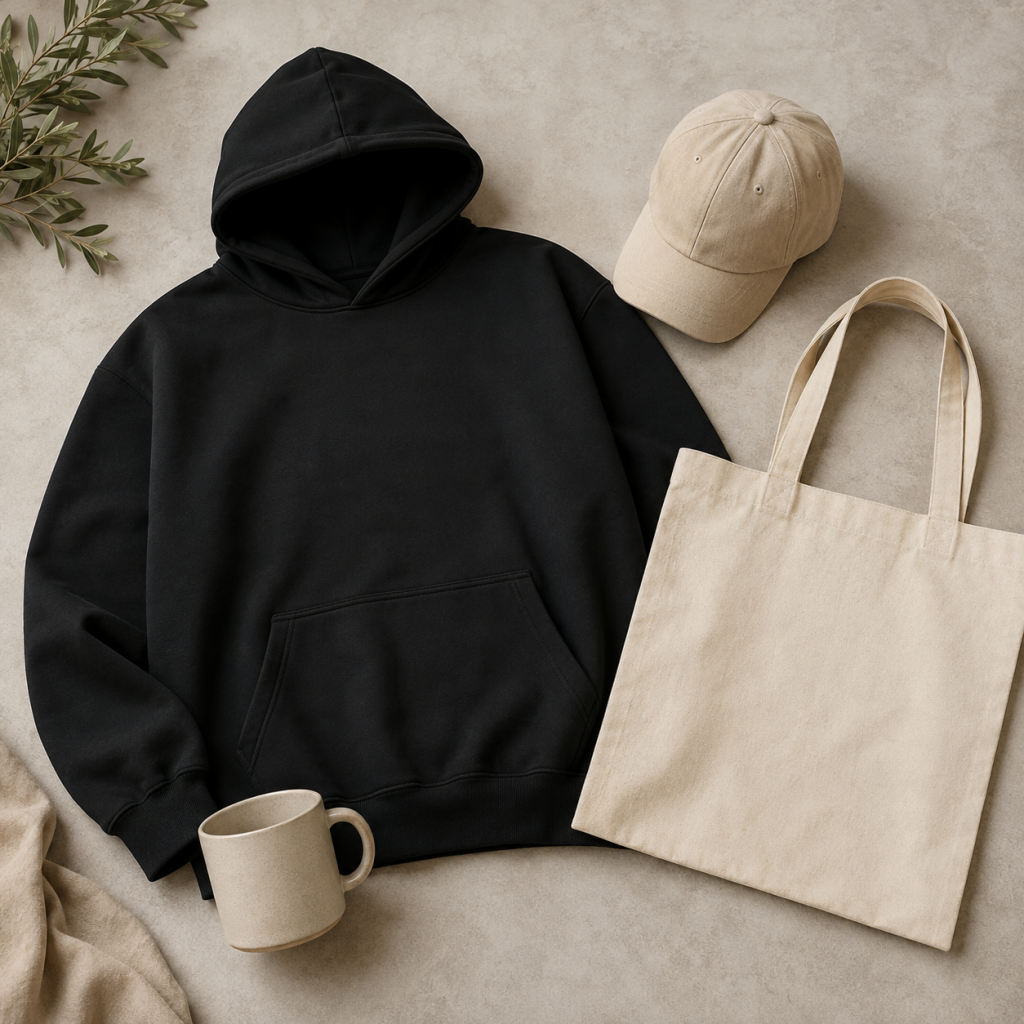
Typical influencer merchandise includes:
- Graphic T-shirts
- Hoodies
- Sweatshirts
- Caps
- Tote bags
- Mugs
- Phone cases
- Posters
- Stickers
- Limited collectibles
The audience purchases the product because of its connection to the creator.
The garment itself still matters, but the emotional value comes mainly from:
- Supporting the creator
- Belonging to the community
- Recognizing a reference
- Remembering a particular era or event
- Showing fandom publicly
Merchandise acts as a physical extension of the content.
Shopify’s 2026 creator-merch guidance describes merchandise as a bridge between creators and their audiences and recommends using references, ideas and details that fans already associate with the creator’s world.
What Is a Creator Brand?
A creator brand is a commercial brand founded, owned or fronted by a content creator.
The creator’s audience provides initial visibility, trust and distribution, but the product is developed to appeal beyond existing followers.
A creator brand may sell:
- Clothing
- Activewear
- Underwear
- Beauty products
- Food and beverages
- Accessories
- Homeware
- Digital products
- Wellness products
- Educational tools
The strongest creator brands are not simply merchandise stores with more sophisticated packaging.
They have:
- Independent brand positioning
- Defined target customers
- Original product strategy
- Recognizable visual identity
- Competitive product quality
- Professional customer service
- Repeat purchasing
- Distribution beyond the creator’s profile
A customer should be able to discover the brand through the product, not only through the person behind it.
The Simplest Way to Understand the Difference
Imagine a creator known for running and fitness.
Influencer merch
The creator releases:
- A hoodie featuring the channel logo
- A T-shirt using a popular quote
- A cap connected to a running challenge
The main customer is already part of the creator’s audience.
Creator brand
The creator develops:
- Technical running shorts
- Performance tops
- Recovery sweatshirts
- Socks
- Seasonal running collections
The products have their own identity, technical requirements and competitive positioning.
A customer may purchase them because they perform well—even if that customer does not regularly watch the creator’s content.
Audience-Led Product vs Product-Led Brand
This is the central strategic difference.
Influencer merch is audience-led
The sequence is:
- Build an audience.
- Identify recognizable references.
- Put those references on products.
- Sell them to the community.
The product follows the audience.
A creator brand becomes product-led
The sequence is:
- Identify a real customer need.
- Develop a competitive product.
- Build the brand around that product.
- Use the creator’s audience to accelerate discovery.
The audience opens the door.
The product must keep the business alive.
Advantages of Influencer Merch
1. Faster to Launch
Merch can often be launched using existing blank products.
The creator selects:
- T-shirt
- Hoodie
- Colour
- Graphic
- Print position
- Packaging
There is no need to develop a completely original pattern or source a unique fabric.
This reduces the time between the initial concept and the sale.
2. Lower Initial Risk
Print-on-demand services can produce one item only after a customer places an order.
Presales and limited drops can also validate demand before bulk production.
Shopify’s current merch guidance highlights presales and short sales windows as methods creators can use to reduce inventory risk before committing to production.
3. Immediate Customer Relevance
Creators already know:
- Which phrases followers repeat
- Which content performs well
- Which references create emotional reactions
- Which visual symbols define the community
- Which products followers request
This removes some of the uncertainty involved in developing an entirely new brand.
4. Strong Emotional Value
A simple product may have significant value to a fan when it represents:
- A shared joke
- A personal transformation
- A community milestone
- A live event
- A podcast episode
- A creator’s personal journey
That emotional relationship can make a straightforward graphic garment commercially successful.
5. Direct Marketing Access
The creator can promote the product through:
- Videos
- Stories
- Livestreams
- Podcasts
- Newsletters
- Community groups
- Events
Current social-commerce systems also make the distance between content and purchase shorter. Eligible YouTube creators can connect their stores, tag products in videos, Shorts and livestreams, and review product performance through YouTube Analytics.
TikTok continues to position short-form video, livestreaming and creator content as integrated product-discovery and commerce channels.
Disadvantages of Influencer Merch
1. Demand Depends Heavily on the Creator
Merchandise sales may fall when:
- Upload frequency decreases
- Audience engagement changes
- The creator changes direction
- A specific joke becomes outdated
- The platform loses relevance
- The creator’s public reputation changes
The product may have little independent demand.
2. Products Can Feel Generic
Many merch collections use the same:
- Blank T-shirt
- Standard hoodie
- Basic chest logo
- Large back print
- Black-and-white colour palette
When the underlying product is weak, the collection can feel like promotional merchandise rather than desirable clothing.
3. Limited Repeat Purchasing
A follower may buy one hoodie to support the creator.
That does not mean they need another one every season.
A clothing brand must offer reasons to return, such as:
- Better fit
- New products
- Useful functionality
- Strong design
- Seasonal relevance
- Quality improvement
4. Lower Control with Print on Demand
Print-on-demand can limit control over:
- Garment fit
- Fabric weight
- Print consistency
- Packaging
- Delivery times
- Returns
- Branding
- Product photography
- Customer experience
It is a valuable testing method but may not support premium positioning.
5. Weak Brand Separation
When every product carries the creator’s name, the business may struggle to develop an identity outside the creator’s personality.
The audience sees a person selling products rather than a brand creating products.
Advantages of Building a Creator Brand
1. Greater Long-Term Business Value
A creator brand can become an independent commercial asset.
It may eventually support:
- Wholesale
- Retail partnerships
- International distribution
- Collaborations
- Licensing
- Investment
- Acquisition
- A management team separate from the creator
The company becomes more than a temporary revenue stream connected to content.
2. Wider Customer Potential
Influencer merch normally targets existing followers.
A creator brand can sell to:
- Followers
- Search customers
- Retail customers
- Customers reached through advertising
- Customers who discover the product through another creator
- People who do not know the founder
This creates a much larger potential market.
3. Stronger Product Differentiation
A creator brand can develop:
- Exclusive fits
- Custom fabrics
- Signature colours
- Original construction
- Recognizable packaging
- Distinctive labels
- Product-specific performance
The product can compete on more than a logo.
4. Greater Pricing Power
A well-developed brand may support a higher price because the customer is purchasing:
- Product quality
- Design
- Function
- Fit
- Materials
- Brand identity
- Customer experience
This is more sustainable than relying only on emotional support from fans.
5. Repeat-Purchase Potential
A creator brand can build ongoing customer relationships through:
- Core products
- Seasonal collections
- Replenishment
- New categories
- Improved versions
- Matching products
- Loyalty programmes
- Community access
Customers return because the product solves a need.
6. Stronger Creator Partnerships
Once the company becomes a real brand, it can work with creators other than its founder.
This allows the business to reach new communities without depending exclusively on one account.
TikTok Shop continues to emphasize creator partnerships as a central way for brands to combine discovery, trust and conversion through shoppable content.
Disadvantages of Building a Creator Brand
1. Higher Investment
A creator brand may require:
- Brand strategy
- Naming
- Trademark protection
- Product development
- Samples
- Bulk production
- Packaging
- Photography
- Website
- Warehousing
- Fulfilment
- Customer service
- Marketing
- Returns management
The founder is building a company, not only preparing a drop.
2. Greater Inventory Risk
Developed products usually require minimum quantities.
The brand must predict:
- Style demand
- Colour demand
- Size demand
- Launch timing
- Reorder quantities
A creator can have millions of followers and still overestimate how many people will buy a particular product.
Audience size is not the same as purchase intent.
3. Slower Product Development
A proper fashion or lifestyle product may require:
- Tech packs
- Material sourcing
- Pattern development
- Samples
- Fit revisions
- Testing
- Production approval
- Quality control
This process can take several months.
Creators accustomed to publishing content immediately may find physical-product timelines frustrating.
4. Operational Complexity
The business must manage:
- Suppliers
- Production deposits
- Delivery schedules
- Warehouses
- Refunds
- Exchanges
- Customer complaints
- Taxes
- Product compliance
- Damaged stock
- Slow-moving sizes
On platforms such as YouTube Shopping, the creator’s connected store or merchandise partner—not YouTube—is responsible for inventory, fulfilment, refunds and customer service.
The creator remains accountable for the customer experience.
5. The Creator Can Overshadow the Brand
The creator’s personal identity may generate the first sales but prevent the brand from developing its own authority.
Every campaign can become:
Buy this because I made it.
Instead of:
Buy this because it is the right product for you.
The founder should remain an advantage without becoming the only reason the business exists.
Merchandise, Creator Brand or Hybrid Model?
There are three practical strategies.
Strategy 1: Pure Merchandise
The creator sells products directly connected to their identity and content.
Best for
- YouTubers
- Podcasters
- Streamers
- Musicians
- Comedians
- Events
- Tours
- Online communities
- Limited campaigns
Typical collection
- Graphic T-shirt
- Hoodie
- Cap
- Tote bag
- Poster
Main objective
Monetize audience connection and strengthen community.
Strategy 2: Independent Creator Brand
The creator launches a brand with a separate name, visual identity and product strategy.
Best for
- Creators with a clear niche
- Founders with long-term commercial ambition
- Products solving a specific problem
- Creators willing to invest in development
- Businesses intended to reach non-followers
Typical collection
- Developed clothing
- Beauty products
- Food products
- Performance products
- Lifestyle essentials
- Homeware
Main objective
Build a consumer company with independent value.
Strategy 3: Creator-Led Sub-Brand
The middle path is often the strongest.
The creator launches a named collection or sub-brand connected to their world but capable of growing beyond direct merch.
Shopify’s 2026 guide uses Seek Discomfort as an example of a project that began as merchandise and developed into a recognizable sub-brand with its own product identity.
Best for
- Creators unsure whether to build a separate company
- Strong communities with product potential
- Creators testing more developed products
- Brands that still benefit from founder association
Main objective
Use fandom as the foundation while gradually developing independent brand equity.
How to Know Which Strategy Is Right for You
Ask the following questions.
1. Why will the customer buy?
Merch answer
Because they support me or recognize the reference.
Brand answer
Because the product fits, performs or looks better than the alternatives.
Both answers can exist, but one should be dominant.
2. Would someone buy it without knowing you?
If the answer is no, the product is probably merchandise.
That is not a problem when merchandise is the objective.
It becomes a problem when the founder expects the business to operate like an independent fashion brand.
3. Do you want a campaign or a company?
A merchandise drop can be:
- Seasonal
- Limited
- Event-based
- Occasional
A brand requires:
- Ongoing product planning
- Customer retention
- Reorders
- Operations
- Development
- Financial management
4. How much capital can you risk?
Merch can begin with print on demand, presales or low quantities.
A developed brand normally requires a larger commitment before demand is fully known.
5. Are you interested in product development?
A creator brand founder must care about:
- Fabrics
- Fit
- Construction
- Packaging
- Customer feedback
- Quality problems
- Margins
- Supply chains
Loving fashion content is not the same as enjoying fashion production.
6. Can the identity grow beyond your personal name?
A separate brand should have:
- Its own visual world
- Its own tone of voice
- Its own customer
- Its own social channels
- Its own reason to exist
Product Strategy for Influencer Merch
A successful first merch collection should be simple.
Recommended structure
- One T-shirt
- One hoodie or sweatshirt
- One accessory
- One clear graphic direction
- Two or three commercial colours
Avoid launching:
- Seven graphics
- Six T-shirt fits
- Ten colours
- Several unrelated product categories
Every additional variation creates:
- More inventory
- More samples
- More photography
- More product pages
- More customer decisions
- More opportunities for mistakes
Use the Community’s Existing Language
Strong merch can reference:
- Catchphrases
- Memorable episodes
- Community names
- Recurring characters
- Visual symbols
- Milestones
- Events
The reference should feel rewarding to followers without producing a garment that looks careless or disposable.
Make the Product Wearable Outside the Community
The strongest merch often works on two levels:
- Followers understand the deeper reference.
- Everyone else sees a good-looking product.
Shopify currently recommends creating merchandise people would want to use or wear even when they are unfamiliar with the original creator or content.
This increases product life beyond one content moment.
Product Strategy for a Creator Brand
A creator brand should begin with a product-market connection.
The founder needs to understand:
- Who is the customer?
- What problem exists?
- Why is the creator qualified to solve it?
- Which product should launch first?
- What makes it different?
- Why will customers reorder?
Strong creator-brand connections
Fitness creator
- Activewear
- Gym accessories
- Recovery clothing
- Performance nutrition
Beauty creator
- Skincare
- Makeup
- Tools
- Travel products
Fashion creator
- Wardrobe essentials
- Accessories
- Underwear
- Footwear
- Occasion products
Travel creator
- Bags
- Packing products
- Technical clothing
- Travel accessories
Home creator
- Textiles
- Storage
- Kitchenware
- Decorative objects
The brand feels more credible when the product is connected to expertise the creator has already demonstrated.
Brand Name: Personal Name or Separate Identity?
Use the creator’s name when:
- The creator is the product
- The audience expects direct personal involvement
- The business depends on expertise or personality
- The product has a coaching, education or entertainment connection
Use a separate brand name when:
- The company should grow beyond the founder
- Other creators may promote it
- Retail distribution is a goal
- Customers should identify with the brand rather than the person
- Future acquisition or investment is possible
Use an endorsed brand when:
The company has an independent name but communicates:
Founded by [Creator]
This provides early trust while allowing the brand to develop its own identity.
Print on Demand vs Private Label
This decision often determines whether the project feels like merch or a brand.
Print on Demand
A supplier prints the product after a customer orders.
Advantages
- No inventory
- Fast launch
- Low initial cost
- Easy testing
- Broad product selection
Limitations
- Lower margins
- Generic garments
- Limited branding
- Inconsistent fulfilment
- Less packaging control
- Limited product exclusivity
Best for
- First merch test
- Short campaigns
- Small audiences
- Artwork validation
- International fulfilment without stock
Private Label
Existing garments are customized in bulk using:
- Custom labels
- Printing
- Embroidery
- Selected colours
- Hang tags
- Packaging
Advantages
- Stronger product quality
- Better branding
- More consistent collections
- Greater control
- Higher perceived value
- Stronger margin potential
Limitations
- Minimum quantities
- Upfront investment
- Inventory risk
- Longer lead time
- Fulfilment required
Best for
- Serious merch collections
- Creator sub-brands
- Clothing brands
- Premium positioning
- Repeat launches
How Much Should a Creator Invest?
The correct amount depends on the strategy.
Print-on-demand merch test
Approximately €500–€2,000
Possible costs:
- Samples
- Artwork
- Store
- Photography
- Basic marketing
Low-MOQ private label merch drop
Approximately €3,000–€8,000
Possible collection:
- 100 T-shirts
- Custom print
- Labels
- Packaging
- Product photography
- Launch content
Creator clothing capsule
Approximately €10,000–€25,000
Possible collection:
- T-shirt
- Hoodie
- Sweatpants
- Custom labels
- Professional campaign
- Inventory
- Fulfilment setup
- Launch marketing
Fully custom creator brand
Approximately €25,000–€75,000+
Possible costs:
- Brand development
- Tech packs
- Patterns
- Fabrics
- Samples
- Bulk production
- Packaging
- Website
- Campaign
- Logistics
- Customer acquisition
These are planning ranges rather than quotations.
Presale, Limited Drop or Permanent Collection?
Presale
Customers order before bulk production.
Best for
- Validating demand
- Reducing inventory risk
- Testing colours and sizes
- Funding production
Main risk
Customers must accept a longer and clearly communicated delivery time.
Limited Drop
Products are available for a fixed period or until sold out.
Best for
- Merch
- Events
- Seasonal launches
- Scarcity
- Community participation
Main risk
False scarcity becomes frustrating when every product is presented as artificially limited.
Permanent Collection
Core products remain available and are reordered.
Best for
- Creator brands
- Essentials
- Repeat purchases
- Search traffic
- Wholesale
- Long-term customer acquisition
Main risk
The brand must maintain stock and manage forecasting.
Strong Hybrid Strategy
Use:
- Permanent core products
- Limited graphics
- Seasonal colours
- Creator-event capsules
This creates ongoing revenue without losing the excitement associated with drops.
How Creators Should Validate Product Demand
Do not ask only:
Would you buy this?
Followers often answer positively because they want to support the creator.
Test real purchase intent.
Better validation methods
- Email waitlist
- Refundable deposit
- Presale
- Limited reservation
- Two-design comparison
- Size survey
- Price sensitivity test
- Product landing page
- Small paid campaign
- Sample worn repeatedly in content
Measure:
- Clicks
- Email registrations
- Deposits
- Conversion
- Preferred colour
- Preferred size
- Acceptable price
Likes are not orders.
Comments are not orders.
Follower count is not inventory planning.
Launch Content Strategy
Creators have an important advantage:
They can make the development process part of the content.
Use:
- Fabric selection
- Sample fitting
- Graphic development
- Colour voting
- Factory visits
- Packaging tests
- Wash tests
- Behind-the-scenes production
- Failed samples
- Founder explanations
- Styling videos
This approach builds demand before stock arrives.
It also makes the product feel like the result of a shared process rather than an unexpected advertisement.
Do Not Turn Every Post into an Advertisement
Creators can damage trust when the product suddenly dominates all content.
Use a balanced structure:
- Educational or entertainment content
- Natural product integration
- Development stories
- Styling or use cases
- Launch announcements
- Customer content
The product should belong naturally within the creator’s existing world.
Social Commerce Strategy
Creators can now connect product discovery more directly with content.
YouTube
Eligible creators can:
- Connect a store
- Display products in a channel shop
- Tag products in long videos
- Tag products in Shorts
- Tag products in livestreams
- Review shopping performance in YouTube Analytics
TikTok
Creators and brands can combine:
- Short-form product content
- Affiliate content
- Livestream selling
- Creator partnerships
- In-platform product discovery
TikTok’s 2025 and 2026 platform communications continue to report strong growth in creator-led livestreaming, short-form commerce content and affiliate sales within supported markets.
Social platforms create discovery.
Email creates direct access.
Collect customer emails before the launch so the business does not depend entirely on algorithms.
The Creator’s Role After Launch
A founder does not need to perform every operational task.
But they should remain responsible for:
- Product vision
- Community communication
- Brand authenticity
- Key creative decisions
- Public accountability
- Customer trust
The creator should not disappear immediately after asking followers to purchase.
Customers notice when:
- Questions are ignored
- Delivery is delayed
- Quality complaints receive no response
- The product is never worn again
- The creator moves on to the next sponsorship
Long-term trust requires continued involvement.
Team Requirements
A successful creator brand may require:
- Product developer
- Manufacturer
- Graphic designer
- Brand designer
- E-commerce manager
- Content producer
- Customer-service support
- Fulfilment partner
- Accountant
- Legal adviser
- Performance marketer
The creator provides distribution and identity.
The team provides repeatable operations.
Common Creator-Merch Mistakes
1. Overestimating the Audience
A large number of followers does not guarantee a large number of customers.
2. Using the Cheapest Blank
Poor fabric and fit can damage the creator’s personal reputation.
3. Producing Too Many Variations
Every style, colour and size increases inventory risk.
4. Using Only the Creator’s Logo
The garment should still look considered and wearable.
5. Ignoring Size Inclusivity
Audience demographics should inform the size range and size distribution.
6. Launching Without Samples
Never approve bulk production from a digital mock-up alone.
7. Hiding Long Delivery Times
Presales work only when customers understand the timeline.
8. Failing to Wear the Product
Customers notice when the creator promotes a garment once and never uses it again.
9. Treating Fans as Guaranteed Buyers
Followers have different budgets, locations and purchasing motivations.
10. Ignoring Customer Service
The creator’s name is attached to every delayed parcel, refund and defective product.
Common Creator-Brand Mistakes
1. Building a Brand Without a Product Need
Aesthetic alone may generate a launch but not repeat purchasing.
2. Assuming Personal Taste Equals Market Demand
The founder’s preferred fit, colour or price may not match the audience.
3. Launching Too Many Categories
Begin with one clear product area.
4. Spending Too Much on Branding Before Product
Customers cannot wear a brand strategy presentation.
5. Depending Exclusively on Founder Content
The company needs acquisition channels beyond one social account.
6. Creating a Name That Cannot Separate from the Creator
The brand should be capable of developing its own cultural relevance.
7. Hiring a Team Without Clear Responsibilities
Creators often move quickly. Production and logistics require structured decisions.
8. Ignoring Margins
High sales with weak margins can create more operational pressure without creating a healthy company.
A Practical Launch Strategy
Phase 1: Validate the Community
Launch:
- One T-shirt
- One hoodie
- One clear visual theme
- Limited quantities or presale
Measure:
- Conversion
- Sizes
- Colours
- Customer feedback
- Returns
- Content performance
Phase 2: Improve the Product
Upgrade:
- Fabric
- Fit
- Labels
- Packaging
- Print technique
- Photography
- Size range
Move from print on demand to controlled private label production when demand supports it.
Phase 3: Create a Sub-Brand
Develop:
- Independent name
- Brand identity
- Product photography
- Separate store
- Dedicated social channels
- Core customer profile
The creator remains visibly involved.
Phase 4: Build Independent Demand
Use:
- Other creators
- Customer content
- Search
- Paid advertising
- Collaborations
- Pop-ups
- Retail partnerships
Track how many customers purchase without directly coming from the founder’s account.
Phase 5: Develop Signature Products
Once demand is proven, invest in:
- Custom patterns
- Exclusive fabrics
- Technical products
- Unique trims
- Seasonal development
- Original fits
The brand becomes harder to copy and less dependent on standard blanks.
Frequently Asked Questions
What is the difference between a creator brand and influencer merch?
Influencer merch is designed mainly for an existing fan community and is closely connected to the creator’s name, content or references.
A creator brand develops products and an identity that can attract customers beyond the creator’s current audience.
Is merch profitable?
It can be.
Profitability depends on:
- Product cost
- Decoration
- Quantity
- Retail price
- Shipping
- Platform fees
- Returns
- Marketing
- Fulfilment
Print on demand reduces risk but generally produces lower margins.
How many followers do you need to launch merch?
There is no minimum number.
A small, highly engaged community can outperform a much larger passive audience.
Purchase intent matters more than follower count.
Should influencers use print on demand?
Print on demand is useful for:
- Testing
- Low-risk launches
- Small audiences
- Temporary campaigns
Private label production is normally more appropriate when quality, branding and margins become priorities.
Should a creator use their own name for a clothing brand?
Use the personal name when the creator’s personality and expertise are central to the product.
Use a separate brand name when the company should grow beyond the founder.
How many products should the first drop include?
One to three products are normally enough.
A focused T-shirt and hoodie collection is easier to develop, explain and sell than a large first collection.
Should creators use presales?
Presales can reduce inventory risk and provide useful size data.
The creator must communicate the delivery date honestly and keep customers informed during production.
Can creator merch become a real brand?
Yes.
Merch can evolve into a sub-brand or independent company when the product, identity and customer base become stronger than the original creator reference.
What is the best clothing product for creator merch?
T-shirts and hoodies remain practical because they:
- Are widely understood
- Provide space for graphics
- Support broad sizing
- Are easier to develop than complex fashion products
The quality of the blank, fit and decoration still matters.
How can a creator avoid unsold inventory?
Use:
- Small first orders
- Presales
- Waitlists
- Deposits
- Limited colours
- Audience surveys
- Realistic conversion assumptions
- Reorders based on sales
Final Verdict: Creator Brand or Influencer Merch?
Choose influencer merch when you want:
- A fast launch
- Low financial risk
- Community products
- Event or content-based drops
- Direct creator branding
- A temporary or occasional revenue stream
Choose a creator brand when you want:
- A long-term company
- Independent brand value
- Better product differentiation
- Customers beyond your followers
- Repeat purchases
- Retail or wholesale potential
- A wider product portfolio
Choose a creator-led sub-brand when you want:
- The trust of your existing audience
- A separate brand identity
- Gradual product development
- A path from merchandise to a real consumer business
Merchandise monetizes attention.
A creator brand converts attention into an asset.
The strongest strategy is often to begin with a focused, low-risk product, validate real demand and improve the product before investing in a complete independent brand.
Private Label Clothes helps creators develop customizable T-shirts, hoodies, sweatpants and shorts in Portugal from accessible production quantities.
Start with one strong product.
Use your community to test it.
Then build the brand around what customers genuinely choose to buy.
Turn your audience into a community—and your community into a lasting brand.
