
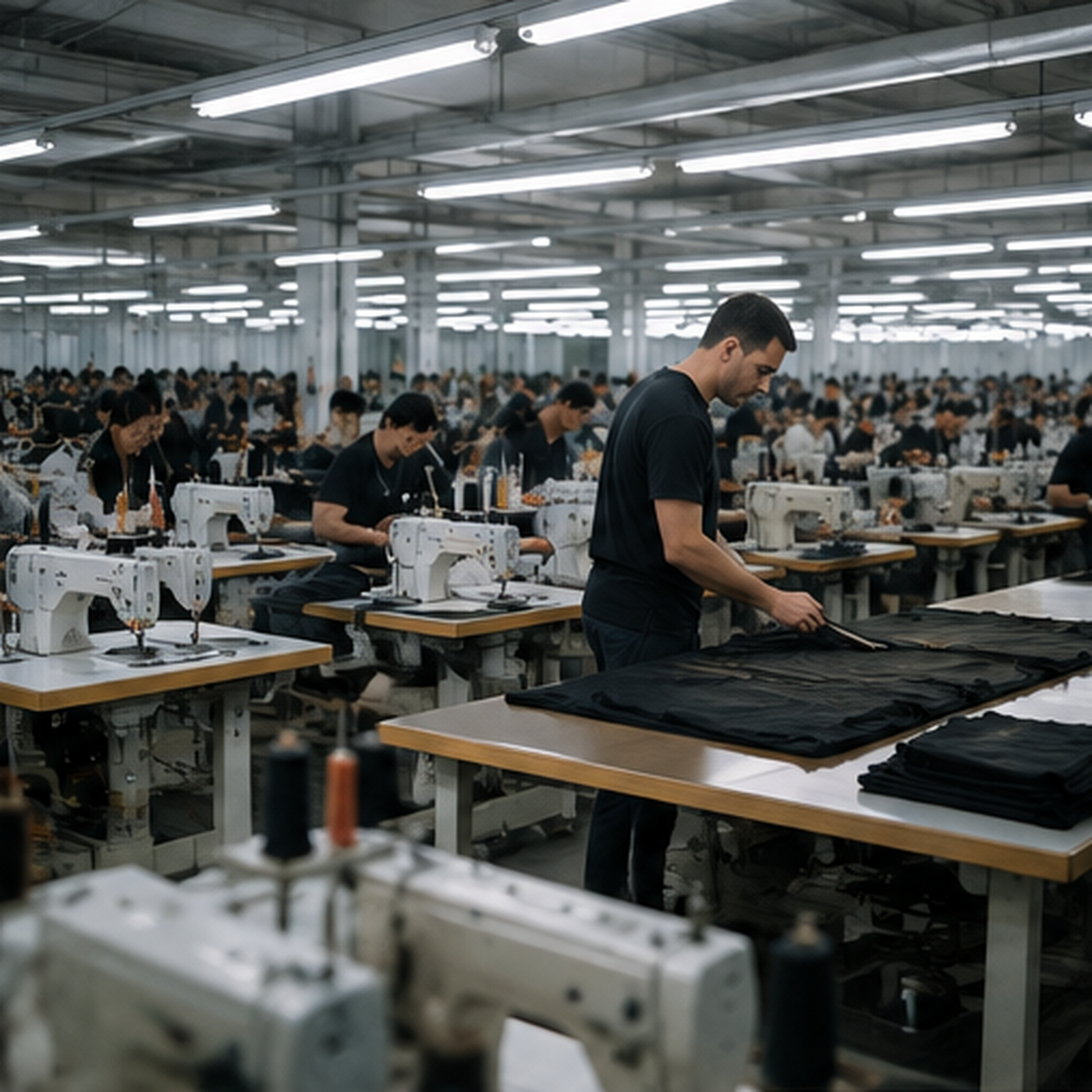
Finding a clothing manufacturer is easy.
Finding one that understands your product, communicates clearly, meets deadlines and delivers consistent quality is considerably harder.
A polished website does not prove that a company owns a factory.
A low quotation does not prove that the supplier can manufacture your design.
A certificate attached to an email does not prove that it covers your order.
And one good sample does not guarantee that 500 production units will arrive with the same measurements, colour and finishing.
The right manufacturing partner should match:
- Your product category
- Your quality level
- Your quantities
- Your target production price
- Your development needs
- Your delivery deadline
- Your compliance requirements
- Your preferred communication style
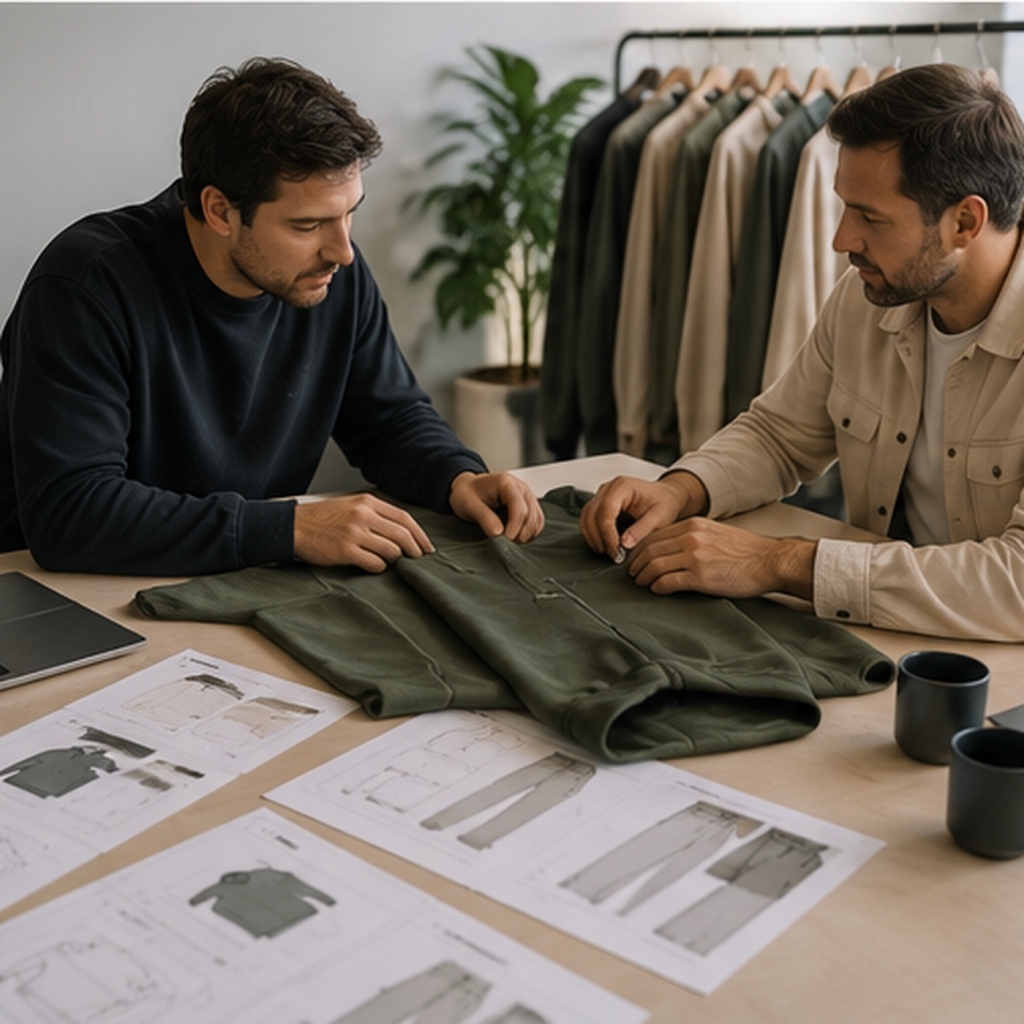
This guide explains where to find European clothing manufacturers, how to verify them and what to confirm before paying for samples or production.
European Clothing Manufacturing at a Glance
| Region | Common strengths |
|---|---|
| Portugal | Jersey, streetwear, loungewear, knitwear, footwear and premium small-to-medium production |
| Italy | Luxury fabrics, tailoring, knitwear, leather goods and specialist finishing |
| Spain | Fashion apparel, knitwear, footwear and accessories |
| France | Luxury development, specialist ateliers and small premium production |
| Romania | Cut-and-sew manufacturing, tailoring, dresses, outerwear and competitive European production |
| Bulgaria | Cut-and-sew garments, sportswear, uniforms and fashion production |
| Poland | Workwear, sportswear, underwear and technical products |
| Lithuania | Linen, knitwear, fashion garments and smaller production runs |
| Turkey | Large textile ecosystem, jersey, denim, knitwear and higher-volume manufacturing |
These are broad tendencies, not guarantees.
A factory’s actual machinery, team, experience and supplier network matter more than the country printed in its address.
1. Define Your Project Before Searching
Most founders begin by searching:
Clothing manufacturer Europe
That is too broad.
A manufacturer producing heavyweight streetwear hoodies may not be suitable for:
- Structured swimwear
- Technical running products
- Tailored jackets
- Seamless underwear
- Leather handbags
- Denim
- Footwear
Before contacting suppliers, define the project clearly.
You should know:
Product category
For example:
- T-shirts
- Hoodies
- Activewear
- Swimwear
- Underwear
- Dresses
- Knitwear
- Denim
- Outerwear
- Footwear
Production model
Choose between:
- Existing blanks
- Private label
- Customized existing products
- Fully custom cut-and-sew
Quantity
State:
- Total quantity per style
- Quantity per colour
- Approximate size breakdown
Target price
Define the maximum production price that works with your retail price and margin.
Deadline
Include:
- Sample deadline
- Production-delivery deadline
- Planned launch date
Technical information
Prepare:
- Tech packs
- Technical drawings
- Measurement charts
- Physical reference samples
- Artwork
- Fabric requirements
- Label specifications
Manufacturers cannot accurately evaluate a project described only as:
We want premium sustainable streetwear at an affordable price.
Translate the idea into product information.
2. Understand Who You Are Contacting
Not every clothing supplier is the same.
You may be speaking with a:
- Factory
- Manufacturer
- Production agency
- Sourcing agency
- Trading company
- Wholesaler
- Print studio
- Private label provider
- Garment decorator
None of these models is automatically bad.
The problem appears when the business presents itself as something it is not.
Direct Factory
A direct factory owns or operates the facility producing the garments.
Advantages
- Direct technical communication
- Greater visibility over production
- Potentially lower intermediary costs
- Easier factory visits
Limitations
- May offer only one part of production
- May not source every fabric or trim
- May expect detailed technical documentation
- May have limited English-speaking commercial support
Production or Sourcing Agency
An agency coordinates several specialist suppliers.
It may manage:
- Fabric sourcing
- Pattern development
- Sampling
- Printing
- Embroidery
- Garment production
- Quality control
- Packaging
- Delivery
Advantages
- One contact for several processes
- Access to specialist factories
- Support for founders with limited production experience
- Easier management of complex collections
Limitations
- Additional service margin
- Less direct communication with each factory
- Quality depends on the agency’s supplier network and controls
A reliable agency should explain transparently which services are completed internally and which are subcontracted.
Private Label Supplier
A private label supplier offers established garments that can be customized through:
- Colours
- Labels
- Prints
- Embroidery
- Packaging
This reduces the development time and risk associated with completely custom products.
Private Label Clothes currently offers customizable Portuguese T-shirts, hoodies, sweatpants and shorts from minimum quantities of 100 units per product.
3. Where to Find Clothing Manufacturers in Europe
Use several sourcing channels rather than depending on one directory.
Industry Referrals
Ask:
- Designers
- Pattern makers
- Fabric suppliers
- Printers
- Embroidery companies
- Fashion consultants
- Other founders
A recommendation from someone who has completed real production is often more useful than an anonymous review.
Ask specific questions:
- What did they manufacture?
- How many units?
- Was production delivered on time?
- Were measurements consistent?
- How did the supplier solve problems?
- Would they place another order?
Textile and Fashion Trade Shows
Trade shows allow brands to:
- Meet suppliers in person
- Compare fabrics
- Examine sample garments
- Discuss quantities
- Understand specializations
- Build several contacts in one visit
Prepare before attending.
Bring:
- Product overview
- Technical drawings
- Quantity estimates
- Target prices
- Deadlines
- Business cards
- Reference samples
Do not spend the meeting explaining your entire brand story before confirming whether the supplier manufactures your product category.
Professional Networks and Industry Associations
European textile clusters, industry associations and business networks can help identify potential partners.
The Enterprise Europe Network has a specialist textiles group covering fashion garments, yarns, footwear, leather, manufacturing processes and international commercial partnerships across more than 20 countries.
Certification Databases
Certification databases are useful when particular standards are essential.
You can search:
- GOTS-certified suppliers
- Textile Exchange-certified companies
- OEKO-TEX-certified manufacturers and products
The official GOTS supplier database allows searches by location, certified operation and product category. Textile Exchange provides a database based on active scope-certificate information, while the OEKO-TEX Buying Guide lists certified manufacturers, brands and products.
Certification does not prove that the supplier is suitable for your design, MOQ or price.
It helps narrow the search and verify specific claims.
Search Engines and Social Media
Search using specific combinations such as:
- Heavyweight T-shirt manufacturer Portugal
- Low MOQ knitwear factory Lithuania
- Swimwear manufacturer Spain
- Cut-and-sew clothing manufacturer Romania
- Private label hoodie manufacturer Europe
- Technical activewear manufacturer Poland
Review:
- Website
- Company address
- Employee profiles
- Factory photographs
- Production videos
- Trade-show participation
- Product categories
Social media can show current activity, but it should not replace legal and commercial verification.
4. Create a Shortlist Instead of Contacting Everyone
Do not send the same generic email to 100 manufacturers.
Create a shortlist of approximately five to ten companies that appear suitable.
Evaluate:
- Product specialization
- MOQ
- Country
- Communication
- Materials
- Certifications
- Development services
- Lead times
- Price positioning
- Existing work
A manufacturer specializing in the correct product is usually more valuable than a general supplier offering every category.
5. Send a Professional First Enquiry
Your initial message should allow the manufacturer to decide quickly whether the project is suitable.
Include:
- Short brand introduction
- Product category
- Number of styles
- Quantity per style and colour
- Target production price
- Deadline
- Delivery country
- Tech pack or reference sample
- Required certifications
- Whether you need private label or custom development
Example Project Summary
We are developing a three-piece streetwear capsule consisting of one heavyweight T-shirt, one hoodie and one pair of sweatpants.
Our estimated first order is 200 units per style across one or two colours. We are targeting an EXW production price of €18–€22 for the T-shirt, €35–€42 for the hoodie and €28–€35 for the sweatpants.
We require custom labels, screen printing and embroidery. Our planned production-delivery deadline is February 2027. Tech packs are attached.
This gives the supplier enough information to provide a meaningful response.
6. Verify That the Company Legally Exists
Before sending money, confirm the business identity.
Request:
- Registered company name
- Company registration number
- VAT number
- Registered address
- Factory or office address
- Bank-account holder
- Commercial contact
- Website and company email
The bank-account holder should normally correspond with the company issuing the invoice.
Check the European Business Register
The European e-Justice Portal provides access to company information from interconnected national business registers across the EU, Iceland, Liechtenstein and Norway. Depending on the national register, available information may include legal representatives, annual accounts and registered capital.
Verify the VAT Number
The European Commission’s VIES service allows users to check whether an EU VAT number is registered for cross-border trade.
A valid VIES result confirms that VAT information exists in the relevant national system. An invalid result may mean that the number does not exist, is not activated for intra-EU transactions or is not yet fully registered.
Save the verification record with your supplier documentation.
VIES alone does not prove manufacturing capability or financial stability.
It confirms only a specific registration status.
7. Confirm the Factory’s Real Capabilities
Ask what the supplier completes internally.
For example:
- Pattern making
- Cutting
- Sewing
- Knitting
- Dyeing
- Washing
- Printing
- Embroidery
- Label production
- Packing
- Quality control
Also ask which processes are subcontracted.
Subcontracting is common in European textile clusters.
A sewing factory may use specialist partners for:
- Fabric dyeing
- Digital printing
- Embroidery
- Garment washing
- Pleating
- Seam sealing
- Laser cutting
The important issue is whether the supplier controls those partners effectively.
Ask for Relevant Production Examples
Request examples similar to your design in terms of:
- Fabric
- Weight
- Construction
- Fit
- Embroidery
- Wash
- Product category
Do not be impressed by an unrelated luxury jacket when you need technical leggings.
Relevant experience matters.
8. Request a Video Call or Factory Visit
A video call can reveal more than weeks of email.
Ask the supplier to show:
- Office
- Sample room
- Production area
- Machinery
- Fabric storage
- Cutting department
- Quality-control area
- Packing area
This does not guarantee reliability, but it helps confirm that the operation matches the company’s description.
For larger projects, visit the supplier before production.
During the visit, observe:
- Organization
- Cleanliness
- Product handling
- Work-in-progress identification
- Storage
- Quality controls
- Communication between departments
- Whether your contact understands the production floor
A beautiful reception area is less important than a controlled production process.
9. Verify Certifications Properly
Do not accept a certificate screenshot without checking it.
Request:
- Full certificate
- Certificate number
- Certified legal entity
- Certified address
- Certification body
- Validity dates
- Certified processes
- Product scope
The company named on the certificate should match the supplier or the clearly identified production partner.
GOTS
Use the official GOTS supplier database to verify certified entities and the products or operations covered by their certification. The database is updated using information from approved certification bodies.
GRS, RCS, OCS and RWS
Textile Exchange provides a certified-company search based on current scope-certificate data.
A scope certificate confirms that a company is certified for particular operations and products. It does not automatically prove that your specific shipment contains certified material.
Ask whether a transaction certificate will be available for your order.
OEKO-TEX
OEKO-TEX provides:
- A label-check service
- A certified-product and manufacturer directory
- Certification information for textiles, facilities and chemicals
The official Buying Guide can be used to search certified cooperation partners and products.
10. Evaluate Communication Quality
Reliable manufacturing depends on accurate communication.
Observe whether the supplier:
- Answers your questions directly
- Identifies missing information
- Explains limitations
- Confirms details in writing
- Uses clear measurements and terminology
- Provides realistic timelines
- Flags technical risks
- Sends organized quotations
- Maintains one consistent contact
A supplier who agrees with everything without asking technical questions may not fully understand the project.
Good manufacturers sometimes say:
- This construction is not suitable for that fabric.
- This target price is not realistic.
- This embroidery is too detailed at that size.
- This deadline cannot be guaranteed.
- This colour requires a larger fabric minimum.
Honest limitations are usually safer than automatic promises.
11. Compare Quotations Correctly
Two quotations may appear similar while including completely different services.
Compare:
- Incoterm
- Product cost
- Sample cost
- Pattern cost
- Fabric
- Fabric weight
- Printing
- Embroidery
- Labels
- Hang tags
- Packaging
- Quality control
- Delivery
- Taxes
- Duties
- Setup fees
- Payment terms
Confirm the Incoterm
Common terms include:
- EXW
- FCA
- FOB
- DAP
- DDP
An EXW price generally covers the goods at the supplier’s premises, while the buyer arranges onward collection and transport.
A DDP price may include delivery and import-related responsibilities.
Never compare an EXW quotation directly with a delivered quotation without calculating the complete landed cost.
Ask What Is Excluded
Request a written list of exclusions.
Possible exclusions include:
- Fabric surcharges
- Labels
- Packaging
- Printing screens
- Embroidery digitization
- Sample courier
- Testing
- Quality inspections
- Freight
- VAT
- Duties
12. Test the Manufacturer with a Sample
A sample is not simply a visual preview.
It tests:
- Technical understanding
- Pattern development
- Material sourcing
- Construction
- Communication
- Attention to detail
- Ability to follow corrections
Never approve bulk production from a digital mock-up alone.
Evaluate the Sample
Check:
Fabric
- Composition
- GSM
- Colour
- Texture
- Stretch
- Recovery
- Transparency
- Pilling
Fit
- Chest
- Length
- Shoulder
- Sleeve
- Waist
- Rise
- Leg opening
- Overall silhouette
Construction
- Seam type
- Stitch consistency
- Reinforcement
- Symmetry
- Collar
- Cuffs
- Pockets
- Zip application
- Loose threads
Branding
- Print size
- Print position
- Embroidery quality
- Label placement
- Label comfort
- Hang tags
- Packaging
Performance
- Wash shrinkage
- Colourfastness
- Print durability
- Shape recovery
- Pilling
- Seam strength
Photograph and measure the sample before and after washing.
13. Send Measurable Sample Comments
Avoid comments such as:
- Make it more premium.
- The fit feels strange.
- The fabric is not right.
- Please improve the collar.
Use measurable instructions.
Better
Reduce the body length from 74 cm to 71 cm in size M.
Better
Increase the finished collar height from 18 mm to 22 mm.
Better
Move the centre-back print 3 cm lower, from 4 cm below the collar seam to 7 cm.
Better
Replace the current 240 GSM fabric with the approved 280 GSM reference submitted on 4 August 2026.
A reliable manufacturer should record these changes and update the technical documents.
14. Request a Pre-Production Sample
The development sample may use substitute fabric, labels or colours.
Before bulk production, request a pre-production sample made using the approved:
- Fabric
- Colour
- Trims
- Labels
- Embroidery
- Construction
- Measurements
- Packaging
Approve it in writing.
Keep one approved sample as the physical standard against which bulk production will be checked.
15. Confirm Quality-Control Procedures
Ask the manufacturer:
- When are materials inspected?
- Are measurements checked during production?
- How are shade variations controlled?
- Is printing checked before full production?
- How are defects classified?
- What inspection percentage is used?
- Can an external inspection company visit?
- What happens when units fail inspection?
- Is a final measurement report available?
For larger orders, consider arranging independent quality control before the final payment or shipment.
Define Acceptable Quality
Your tech pack or purchase agreement should identify:
- Measurement tolerances
- Print-position tolerances
- Colour requirements
- Stitching requirements
- Packaging standards
- Defect classifications
- Inspection procedure
- Remedy for defective units
“Premium quality” is not measurable.
16. Review Payment Terms Carefully
Common arrangements may include:
- Sample payment in advance
- Production deposit
- Balance before shipment
- Balance after inspection
- Letter of credit for larger orders
Avoid sending payment when:
- The legal company name is unclear
- The bank account belongs to an unrelated individual
- No formal quotation exists
- Product details are missing
- Payment terms change unexpectedly
- The supplier pressures you to pay immediately
- No invoice is issued
For a new relationship, avoid paying the entire bulk-production value before any meaningful production milestone unless there is a clear commercial reason and sufficient protection.
17. Use a Written Purchase Agreement
For serious production orders, document:
- Style references
- Quantities
- Colours
- Sizes
- Unit prices
- Total value
- Incoterm
- Delivery date
- Approved specifications
- Quality tolerances
- Packaging
- Payment schedule
- Ownership of patterns and artwork
- Confidentiality
- Defective-product procedure
- Delay procedure
- Cancellation terms
- Governing law
Email conversations are useful evidence, but they should not be the only record of a significant production agreement.
18. Confirm Who Owns the Pattern and Materials
Ask:
- Who owns the pattern?
- Can the pattern be transferred?
- Who owns custom moulds or screens?
- Who stores unused fabric?
- Can remaining labels be returned?
- Can the factory use your design for another customer?
- What happens if cooperation ends?
If the brand pays for original pattern development, ownership should be addressed clearly.
Never assume.
19. Check European Product-Compliance Awareness
A reliable European supplier should understand that manufacturing and selling responsibilities are separate.
Even when the factory produces the garment, the brand placing the product on the market may remain responsible for compliance.
Textile Fibre Labelling
EU textile rules require consumer products to state fibre composition using recognized fibre names.
The information must be durable, visible, legible and accessible, and it generally needs to appear in the official language or languages of the country where the product is sold.
Ask the supplier to confirm:
- Exact fibre composition
- Label dimensions
- Label material
- Required languages
- Position
- Durability
General Product Safety
The EU General Product Safety Regulation requires relevant economic operators to place only safe products on the market.
Manufacturers have obligations involving risk analysis, technical documentation, product identification, traceability and action when a product is considered dangerous.
Your manufacturer should be able to provide accurate product and supply-chain information needed for your compliance documentation.
20. Start with a Controlled First Order
Do not make your first order unnecessarily large merely to reduce the unit price.
A smaller initial production allows you to evaluate:
- Bulk quality
- Colour consistency
- Size distribution
- Delivery reliability
- Customer feedback
- Returns
- Bestseller potential
The cheapest unit price is not useful when half of the inventory remains unsold.
A controlled order also limits the financial damage if the first production does not meet expectations.
Reliable Manufacturer Scorecard
Use a simple scorecard to compare shortlisted suppliers.
Score each category from 1 to 5.
| Category | Weight |
|---|---|
| Product-category experience | 15% |
| Sample quality | 20% |
| Communication | 15% |
| Price and transparency | 10% |
| Lead-time reliability | 10% |
| MOQ suitability | 10% |
| Compliance and certification | 10% |
| Quality-control process | 10% |
Do not automatically select the cheapest factory.
A supplier scoring well across quality, communication and reliability may produce a lower total business cost even with a higher unit price.
Red Flags When Choosing a Clothing Manufacturer
No legal company information
The supplier refuses to provide a registered name, VAT number or address.
Unrelated bank account
Payment is requested to a person or company not shown on the quotation.
Unrealistically low price
The price is far below every comparable quotation without a clear explanation.
No technical questions
The supplier quotes a complex product without reviewing materials, measurements or construction.
Everything is possible
The company accepts every quantity, deadline, price and product category immediately.
Copied factory photographs
Images appear inconsistent or belong to several unrelated facilities.
Refusal to show production
The supplier will not arrange a video call or visit without a credible reason.
Certificate does not match
The certificate belongs to another company, address or product category.
Pressure to pay
The supplier creates artificial urgency before confirming the specification.
Constantly changing information
Prices, payment details, addresses or lead times change without explanation.
No written quotation
Important information remains only in messaging-app conversations.
Sample quality is explained away
Visible problems are dismissed instead of corrected.
Questions to Ask Before Paying
Company
- What is your registered company name?
- What is your VAT number?
- Where is production completed?
- Which processes are subcontracted?
- Can we arrange a factory visit or video call?
Product
- Have you produced similar garments?
- Which fabrics do you recommend?
- What is the available GSM?
- Can you meet the measurement tolerances?
- Can you source all trims and labels?
Minimums
- What is the MOQ per style?
- What is the MOQ per colour?
- Does each artwork count as a separate style?
- Can sizes be mixed?
Development
- What is the sample cost?
- How many revisions are included?
- Who develops the pattern?
- Who owns the final pattern?
- What is the sample lead time?
Production
- What is the production lead time?
- When does the lead time begin?
- How is quality controlled?
- Can we approve a pre-production sample?
- Can an external inspection be arranged?
Pricing
- Which Incoterm applies?
- What is included in the unit price?
- Which setup fees apply?
- Are labels and packaging included?
- Is transport included?
- Is VAT included?
Payment
- What deposit is required?
- When is the balance due?
- Can the final payment follow inspection?
- Which legal entity receives payment?
Certification
- Can you provide the current certificate?
- Does it cover this product and facility?
- Can a transaction certificate be issued?
- Are we authorized to use the certification claim?
Manufacturer vs Private Label Supplier
A fully custom manufacturer is suitable when you need:
- Original pattern
- Unique fabric
- Custom construction
- Exclusive trims
- Signature fit
- Full product development
A private label supplier is suitable when you need:
- Faster launch
- Proven garments
- Lower development costs
- Accessible minimums
- Custom labels
- Printing and embroidery
- Reduced product risk
You do not need fully custom manufacturing to prove that a brand concept works.
Begin with the simplest production model capable of delivering the quality and identity your customer expects.
Why Brands Choose Portugal
Portugal is particularly relevant for brands developing:
- T-shirts
- Hoodies
- Sweatpants
- Jersey garments
- Knitwear
- Loungewear
- Underwear
- Streetwear
- Footwear
Its concentrated textile ecosystem allows brands to coordinate specialist processes such as knitting, dyeing, garment production, embroidery, printing and packaging within a relatively compact region.
For European brands, Portugal also offers easier travel, similar working hours and intra-EU commercial movement.
The correct partner still needs to be verified individually.
“Made in Portugal” is not a replacement for sampling, contracts and quality control.
Frequently Asked Questions
How do I find clothing manufacturers in Europe?
Use:
- Industry referrals
- Trade shows
- Textile associations
- Certification databases
- Enterprise Europe Network
- Search engines
- Production agencies
- Fabric-supplier recommendations
Create a shortlist based on product specialization rather than contacting every supplier.
How can I check whether a manufacturer is legitimate?
Verify:
- Registered legal company
- VAT number
- Company address
- Bank details
- Business-register information
- Factory capability
- Certificates
- References
- Physical samples
Use official tools such as VIES and the European Business Registers Interconnection System for initial checks.
What information should I send a manufacturer?
Send:
- Tech packs or physical samples
- Quantity per style and colour
- Target production price
- Deadline
- Delivery destination
- Artwork
- Fabric requirements
- Certification requirements
Should I choose the cheapest quotation?
No.
Compare:
- Fabric
- Construction
- Services
- Quality
- MOQ
- Lead time
- Payment terms
- Logistics
- Communication
A low factory price can become expensive if the order is delayed, defective or commercially unusable.
Can I work with a manufacturer without a tech pack?
For existing private label garments, complete cut-and-sew documentation may not be necessary.
For custom designs, a tech pack or detailed physical reference sample is strongly recommended.
Should I order a sample first?
Yes.
Review a physical sample before bulk production and request a pre-production sample using approved bulk materials and branding.
How many manufacturers should I contact?
Five to ten well-selected suppliers are usually more useful than sending a generic request to dozens of unrelated factories.
What is a reasonable European MOQ?
MOQs vary by:
- Product
- Fabric
- Factory
- Colour
- Construction
- Production model
Private label products may begin around 50–100 units, while fully custom garments can require several hundred units per style or colour.
Can a manufacturer copy my design?
Use:
- NDA where appropriate
- Written ownership terms
- Controlled file sharing
- Clear pattern and artwork ownership clauses
An NDA does not replace choosing a trustworthy partner.
Is a certification enough to prove reliability?
No.
Certification verifies defined requirements within its stated scope.
It does not prove that the company can meet your fit, quality, quantity, price or delivery deadline.
Should I use a factory or production agency?
Use a direct factory when you have technical experience and the product matches its specialization.
Use an agency when you need coordination across several suppliers, categories or processes.
Transparency and quality control matter more than the business model.
Final Checklist
Before confirming production, make sure you have:
- Verified the legal company
- Confirmed the VAT number
- Understood whether it is a factory or agency
- Checked relevant production experience
- Reviewed current certificates
- Confirmed MOQ per style and colour
- Received a detailed quotation
- Confirmed the Incoterm
- Approved a physical sample
- Completed wash and wear testing
- Approved all measurements
- Approved fabric and colour
- Approved labels and packaging
- Agreed payment milestones
- Agreed delivery dates
- Defined quality tolerances
- Confirmed pattern ownership
- Signed a purchase agreement
- Planned quality inspection
- Kept contingency time and budget
Final Answer: What Makes a Manufacturer Reliable?
A reliable clothing manufacturer does not simply say yes.
It asks the correct questions.
It explains limitations.
It provides clear documents.
It confirms who is producing the garments.
It follows approved samples and measurements.
It communicates problems before they become emergencies.
And it treats your first order with the same level of control required for future growth.
Do not select a supplier based only on:
- Country
- Website
- Price
- One certificate
- One sample
Evaluate the complete partnership.
Begin with a clearly defined product.
Verify the business.
Test the supplier through sampling.
Document every approval.
Start with a controlled order.
Then grow production after the manufacturer has demonstrated consistent results.
Private Label Clothes helps emerging brands develop customizable T-shirts, hoodies, sweatpants and shorts in Portugal from 100 units per product, combining established garments with custom artwork, labels and branding.
Choose a manufacturer that understands the product—not only the order quantity.
